[ HUMAN VALIDATION / BARRIER MONITORING ]

Barrier monitoring

How does epithelial barrier function change over time?

[ BARRIER ]

Barrier monitoring

How does epithelial barrier function change over time?

Barrier monitoring
  1. Establish the model and baseline impedance before treatment.
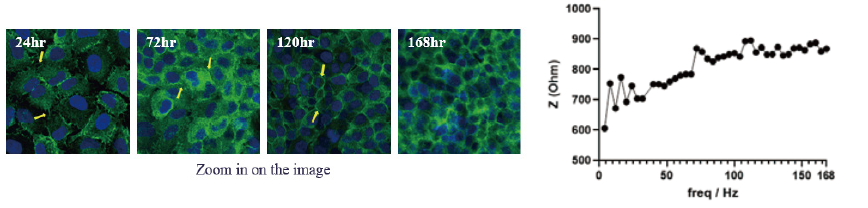
  2. Follow tissue maturation with repeat electrical measurements and microscopy.
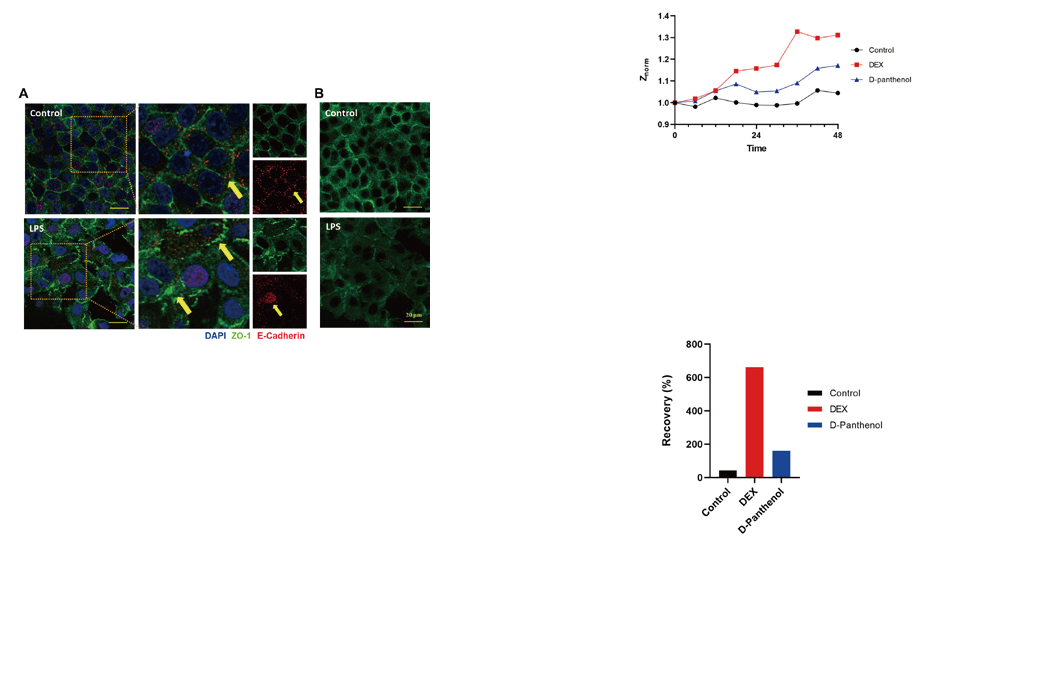
  3. Compare control, disruption and treatment conditions over time.
  4. Interpret impedance alongside ZO-1 and E-cadherin observations.
STUDY OUTPUT
Longitudinal electrical measurements with imaging context for barrier development and treatment response.
Discuss this application

[ APPLICATION INSIGHTS ]

A closer look at the biology.

Track barrier development
01

Track barrier development

Compare impedance observations with cell coverage and junctional proteins during tissue maturation. The microscopy series covers 24, 72, 120 and 168 hours.

Source: September 2026 brochure, page 6
Evaluate barrier disruption and recovery
02

Evaluate barrier disruption and recovery

LPS exposure changes ZO-1 and E-cadherin distribution. The brochure combines microscopy with longitudinal impedance to compare dexamethasone and D-panthenol treatment responses.

Source: September 2026 brochure, page 6

Illustrative research examples from the product brochure. Study methods and full results can be discussed with our team.

View the complete brochure

[ PLAN THE STUDY ]

See how the work connects.

Review the shared study process for model selection, controls, execution and reporting.

View study workflow

[ NEXT STEP ]

Advance Your Next Drug Program with Human-Relevant Evidence.

Tell us what you’re working on. We’ll help you explore the right model, platform or collaboration.

Let’s Talk